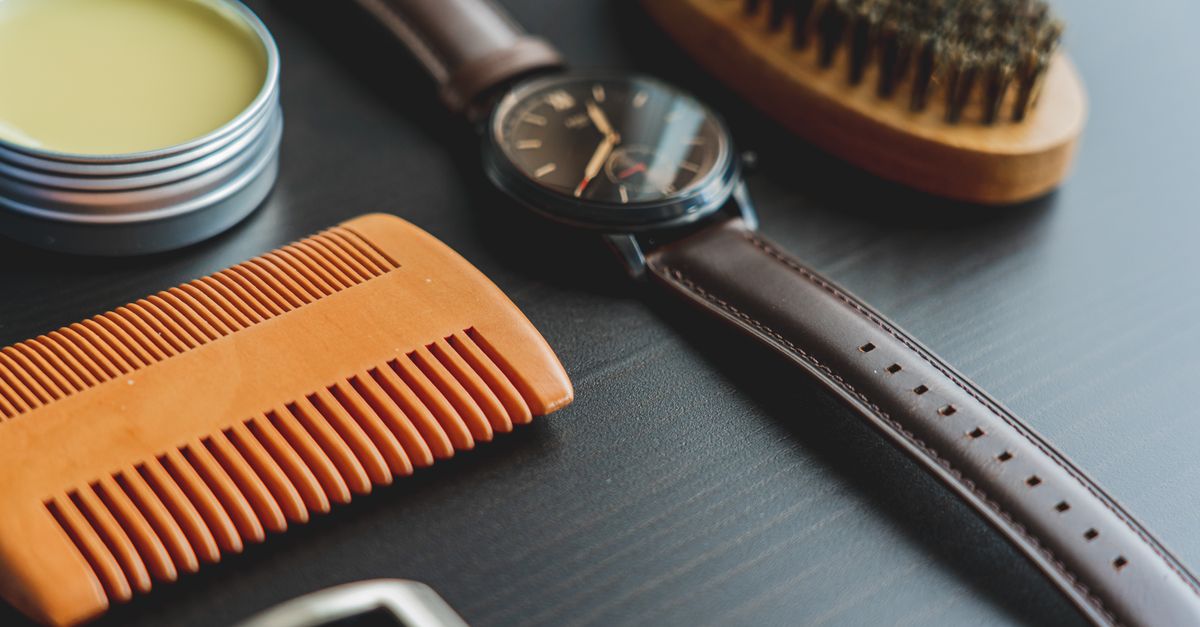
Nobody warns you about the broken level. The ratchet set with three missing pieces. The coffee mug that says something deeply stupid about fishing. The watch went to your brother. The tools that actually work went to a neighbor who knew how to use them. But you kept that.
You kept the thing that no estate lawyer would ever list. No appraiser would touch it. It has no resale value, no sentimental backstory you could explain at a dinner table. And yet there it is, in your garage or your desk drawer or the back of your closet, because getting rid of it felt wrong in a way you couldn't articulate even to yourself.
Grief has a logic. It just doesn't look anything like the logic you expected.
The Heirlooms Were Never the Point
There's a cultural script for what you're supposed to keep after a parent dies. The watch. The wedding ring. The framed photos. The one piece of furniture that's been in the family long enough to have a story attached. These are the items that get passed down with ceremony, with intention, with the quiet agreement that they mean something.
The problem is that grief doesn't follow the script.
What actually happens — what men who've been through it know and rarely say out loud — is that the estate logistics become this strange sorting exercise where you're supposed to be making rational decisions while your brain is running on about forty percent capacity. You walk through the garage, the basement, the shed. And the stuff that stops you isn't the good stuff. It's the accumulated ordinary junk of a man's actual life. The workbench covered in half-finished projects. The drawer full of screws sorted into margarine containers. The smell of motor oil and sawdust and whatever he used on his hands.
That garage isn't a storage problem. It's a portrait.
The Dead Dads podcast talks about this directly — the "garages full of 'useful' junk" that outlast the man who collected it. Most grief content skips this entirely. It wants to talk about feelings in abstract terms, about the five stages, about healing timelines. It doesn't want to reckon with the fact that a significant portion of early grief is standing in a fluorescent-lit hardware store six months later and suddenly not being able to breathe because your dad used to buy the exact same brand of electrical tape.
The ordinary objects are where he lived. That's why they hit harder than the heirlooms.
The Inventory Nobody Talks About
If you ask men what they kept after their dad died — really kept, not what they were supposed to keep — the answers get interesting fast.
Somebody kept a half-used can of wood stain. The project it was for never got finished. The can sat on a shelf in the garage for two years before anyone moved it, and when they finally did, they put it in a box instead of the trash. They're not sure why.
Somebody kept a worn flannel shirt that had been washed so many times the pattern had faded into something almost abstract. It doesn't smell like him anymore. But it was his, and that fact alone is enough.
Somebody kept a notepad from his desk — not because of what was written in it, but because of his handwriting. The list was nothing. Grocery run, call the insurance company, pick up more of those screws. But the handwriting was his. The particular way he made the letter S. The way he pressed hard with a ballpoint even when he didn't need to. That notepad is in a kitchen drawer right now in a house where someone's dad has been gone for years.
Nobody kept these things because they're valuable. They kept them because these objects hold a version of the man that doesn't exist anywhere else. Not in the obituary. Not in the photos from his best years. The obituary tells you what he accomplished. The half-empty can of wood stain tells you what he was like on a Tuesday.
There's a particular weight to objects that carry evidence of interruption — the project that stopped mid-task, the book with a bookmark still in it, the handwriting on a shopping list. They suggest continuation. They suggest he was just here. And that feeling, irrational as it is, is exactly why the brain locks onto them.
This is also what makes clearing out a parent's house one of the harder things a person can do — not because it's physically difficult, but because every object is a small decision about what version of him gets to survive. When grief gets weird like this, you're not losing your mind. You're doing exactly what the brain does when it's trying to hold onto someone.
What Objects Actually Do
Here's the honest version: these things aren't keepsakes. They're proxies.
A keepsake is something you preserve because it represents a memory. A proxy is something that activates presence. The difference matters. When you open the drawer and see his handwriting, you don't just remember him — for a second, something in your nervous system believes he was just here. That's not magical thinking. That's how sense memory and object association actually work.
Smell is the most obvious version of this. The brain processes olfactory information through the limbic system, which is also where emotional memory lives. So a worn flannel shirt, a specific brand of aftershave still sitting on a bathroom shelf, the particular smell of his car — these aren't triggering memories the way a photograph does. They're triggering something more physical, more immediate. More disorienting, honestly.
But it's not just smell. Texture works too. Weight. The specific resistance of a tool handle worn to the shape of someone else's grip. The way a coffee mug feels in your hand when you know it was his. Objects that were used repeatedly by someone carry a kind of presence in them that new objects don't have. This isn't sentimentality. It's the body recognizing something familiar.
The episode featuring Bill Cooper, whose father Frank lived with dementia before he died, gets at something related to this. Bill talks about what it means to keep his dad present — not through grand gestures or formal rituals, but through habits, through stories, through the way his dad shows up in how he moves through the world. The throughline in that conversation is this: if you don't actively carry someone forward, they start to disappear. Not from your heart. From your actual daily experience. They become theoretical.
For a lot of men, objects are the non-verbal version of that same work. Talking about grief is hard. Telling someone about your dad is vulnerable in a way that doesn't always feel accessible, especially in the early months when everything is raw and nothing comes out right. But keeping the coffee mug, keeping the flannel, keeping the half-finished project in the garage — that's a form of presence-maintenance that doesn't require words. It doesn't require anyone else to be there. It's private and it works.
One listener described it this way in a review: "It's the type of pain that I bottle up and keep to myself. I felt some pain relief..." That's what these objects do at their best — they offer a private channel back to the person you lost, on your own terms, without an audience.
The Dead Dads episode with Greg Kettner makes a point worth sitting with: not talking about your dad can slowly erase his presence. The same is true of not keeping anything of his. Not because you owe him a shrine — you don't — but because human beings maintain connection through physical anchors, and when all of those anchors are gone, the relationship lives only in memory, which is the most unreliable storage medium we have.
The watch your brother kept is a beautiful thing. The heirlooms matter. But don't underestimate the broken level. Don't throw out the notepad with the grocery list. Carrying your father's legacy forward doesn't always mean doing something grand — sometimes it means hanging onto the thing that nobody else wanted because some part of you knew it was doing a job.
There's No Right Object
If you're in the middle of clearing out your dad's house right now, here's the only practical thing worth saying: don't let anyone rush you past the weird stuff.
You'll know which objects to grab. They're the ones that make you stop moving for a second. You don't have to justify them to anyone. You don't have to explain why a cracked level or a drawer full of zip ties belongs in your house. Grief doesn't run on logic that other people can follow from the outside — it runs on the specific, private, accumulated language of your relationship with your dad. Nobody else speaks that language. Which means nobody else gets a vote.
The heirlooms will hold one version of him. The weird stuff holds another. Keep both. The ordinary objects, the tools with missing pieces, the handwriting on a grocery list — those aren't less meaningful than the things that appraised well. They might be more. They're the ones that say: here was a man, and this is how he actually spent his days, and he was here, and it mattered.