
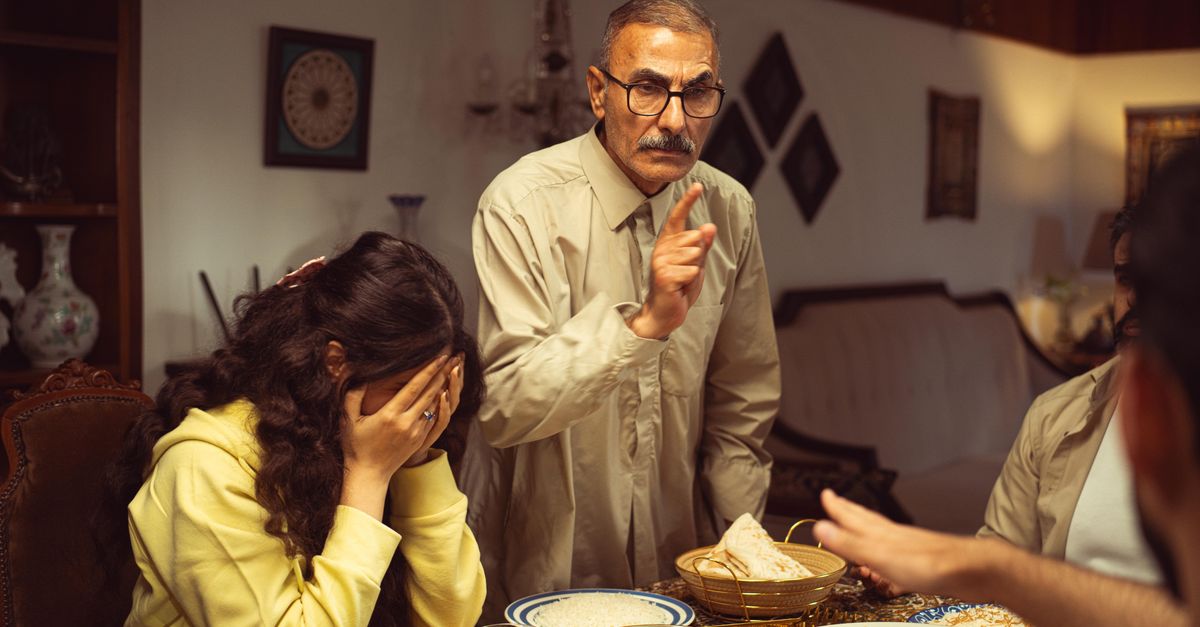
Your dad dies. Within two weeks, you're in a text thread with your siblings arguing about who gets the drill press. This isn't a failure of love. It's one of the most predictable things that happens after a father dies — and almost no one prepares you for it.
The condolence cards don't mention it. The funeral director doesn't bring it up. And the people closest to you are too busy grieving to name what's starting to simmer beneath the surface. So when the conflict hits — and it usually does — it can feel like a second loss stacked on top of the first.
Understanding why it happens doesn't make it stop. But it does make it easier to survive without torching relationships you actually care about.
The Load-Bearing Wall That Just Disappeared
In most families, a father serves a structural function that nobody fully recognizes until it's gone. He wasn't just a person. He was the connector — the one people called first, the one who smoothed things over at Christmas, the one whose presence kept certain dynamics quietly in check.
That's not a romantic notion. It's architecture. And when that piece disappears, the whole structure shifts. According to grief researchers and clinicians who work with families after a death, the loss of a parent — particularly a father in families where he held a central role — can destabilize relationships that seemed stable for decades.
Old sibling dynamics, long dormant, wake up immediately. The eldest who always felt responsible. The youngest who always felt overlooked. The middle child who managed everyone else. Those patterns don't disappear when a parent dies; they get activated. Suddenly there's no authority figure to appeal to, no mediator, no one keeping the peace by sheer gravitational presence.
And because everyone is grieving differently, nobody is operating at their best when the conflicts start. That's the cruel timing of it. The moment you most need your family to function well is the moment they're least capable of it.
The Five Flashpoints That Actually Start the Fires
Conflict after a father's death doesn't usually start with a single dramatic confrontation. It starts with a series of smaller decisions — logistics, objects, money — that each carry far more emotional weight than they appear to on the surface.
The Will (or the Absence of One)
Sudden loss is particularly brutal here. A heart attack, an accident, a diagnosis that moved faster than anyone expected — and suddenly someone has to make major decisions without any documented guidance. What Happens After Your Dad Dies That No One Prepares You For is practically a genre at this point, but the paperwork chapter hits different when there's no will.
Even when a will exists, it rarely accounts for everything. It might specify the house and the savings, but say nothing about the watch, the tools, the car, or the furniture. Those gaps become contested territory, and they can feel surprisingly charged. A will is a document. It doesn't settle feelings.
His Stuff
The garage, the tools, the shelves of hardware — your dad's possessions carry meaning that nobody ever put into words while he was alive. The drill press isn't just a drill press. For one sibling, it's every Sunday project they worked on together. For another, it's just a machine that should probably go to someone who'll use it. Neither of them is wrong, but they're operating from completely different emotional registers.
For a deeper look at how this plays out — and why it's sometimes easier to laugh at it than cry — the article Dad's Garage After He Dies: Why Laughing at the Junk Is an Act of Love is worth reading. The junk is real. So is the meaning buried inside it.
The digital estate is its own category entirely — passwords, locked devices, accounts no one knew about. If your dad had a password-protected iPad and no instructions, you're in good company. The complications that follow are both genuinely absurd and genuinely painful. The Password-Protected iPad and the Case for Sarcasm While Settling Your Dad's Estate goes into that particular corner of the mess.
Who Did the Work
This one is slow to surface but hits hardest. A father's death tends to make visible everything that was invisible while he was alive: who drove him to appointments, who managed his medications, who covered the bills when money got thin, who stayed close and who quietly disappeared.
A March 2026 analysis of sibling dynamics after parental loss describes it directly: there is almost always one person who knew the lawyer's phone number, had all the documents in a binder, and had been carrying that weight for years without anyone noticing. When the death happens and the siblings who were less present show up with strong opinions, that discrepancy rarely stays quiet.
This isn't always about money. It's about recognition. The person who carried the load often just wants that acknowledged. When it isn't, the conflict has a long fuse.
The House
If your dad owned property, the house question lands early and stays complicated. Some family members can't bear to sell it — it's where Christmas happened, where the smell of him still exists, where the idea of him staying alive feels possible. Others see the carrying costs, the market, the practicality. Both positions are legitimate. Neither is easy to hear if you're in the opposite one.
Timeline pressure makes this worse. There are mortgages, property taxes, maintenance decisions that can't wait for everyone to process their grief on their own schedule. The house forces a timetable on people who aren't ready for it.
Money, Directly
Even in families that never argued about finances, a parent's death can open up old accounts. According to grief researchers at What's Your Grief, material possessions and financial decisions are the single most common source of family conflict after a death. The number is probably undercounted, because many of these conversations happen privately and never get named as conflict.
Funeral costs alone can be a flashpoint if the estate is thin or if family members have different ideas about what's appropriate to spend. Add in bank accounts, insurance payouts, debt — and suddenly you're having conversations that feel nothing like grief and everything like a negotiation.
Why This Doesn't Mean Your Family Is Broken
The temptation when this happens is to make it mean something about your family specifically. This is who we really are. This is what he left behind. That interpretation is both understandable and almost certainly wrong.
Family conflict after a father's death is structurally predictable. It's not a sign of dysfunction; it's a sign that a significant structural change just happened and nobody has a playbook. The research on this is consistent: families who consider themselves close and functional experience conflict after parental loss at rates that surprise them every time.
In the Dead Dads episode featuring John Abreu, the raw reality of receiving that call — and then having to sit down and tell your family — captures something that rarely gets said out loud: grief is never just one thing. It arrives with logistics and decisions and other people's pain all at once. The conflict that follows isn't separate from the grief. It's part of it.
What You Can Actually Do
This section is not going to promise resolution. Some of these conflicts end cleanly. Many don't. What follows is closer to damage reduction — ways to get through the immediate aftermath without making things worse than they need to be.
Separate the logistics from the emotions, at least temporarily. The decisions about the house, the tools, the accounts — those have deadlines. The emotional work of figuring out what those decisions mean to each person doesn't. When possible, make the time-sensitive calls without waiting for full emotional agreement. Save the deeper conversations for later, when everyone has slightly more capacity.
Name what you actually need. Most family conflict after a death is people fighting about objects when they're actually fighting about being seen. Before a conversation escalates, it's worth asking — including of yourself — what this is really about. The drill press is rarely about the drill press.
Give people room to grieve differently. One sibling might want to clear the house within a month. Another might not be ready to touch anything for a year. Neither is the correct grief timeline. The conflict often comes from treating one approach as normal and the other as aberrant. It's worth saying out loud that there's no standard here.
Don't make permanent decisions about relationships in the acute phase. The weeks immediately after a death are genuinely not representative. People say things they don't mean. They fight about things they'll later feel embarrassed about. If you can, give it some time before deciding that a relationship is irrevocably damaged. Some of it will look different in six months.
Let someone else hold the complicated history. If you're the one who was doing the caretaking, the managing, the invisible work — you don't have to defend it. The record is the record. The more useful move is to find someone outside the family to talk to about what you're carrying, rather than trying to make your siblings understand in the middle of a dispute about an estate.
The Conflict Is Telling You Something
Family drama after a father's death is almost never really about what it appears to be about on the surface. It's a pressure system that's been building for years, finally releasing through whatever opening appeared. The death created the opening. It didn't create the pressure.
That's not a comfortable realization. But it's a more useful one than concluding that your family has failed or that your dad's death broke something that was fine before. Most of the time, the conflict surfaces things that were already there — things that couldn't be seen while he was alive because he was holding the shape of the family together.
Grief does that. It pulls everything into sharp focus at the worst possible moment, when you're least equipped to look at it clearly. The Dead Dads podcast exists in part because these conversations — the messy, uncomfortable, logistically chaotic ones — don't have enough space anywhere else. Not in therapy waiting rooms, not in the break room at work, not in conversations where people expect you to say "I'm doing okay" and move on.
The grief that hits you in the middle of a hardware store, the argument about a drill press, the silence at family dinners where he used to sit — it's all connected. And it's all survivable.