
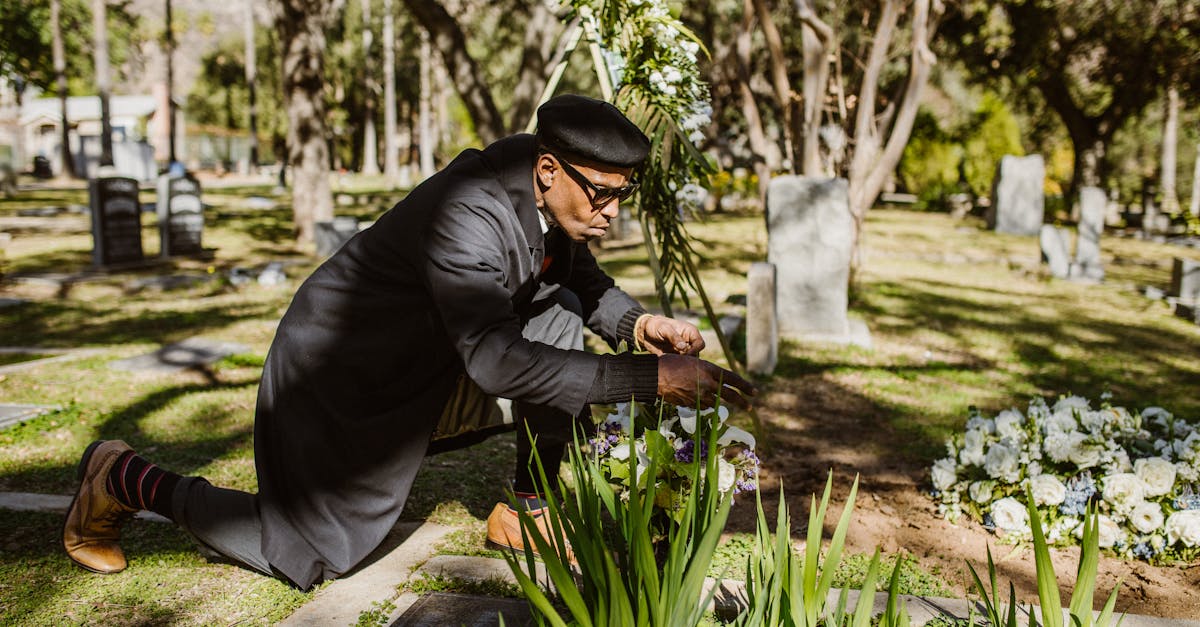
The five stages of grief were never written for you. Elisabeth Kübler-Ross developed that model in the 1960s to describe how terminally ill patients process their own approaching death — not how a son grieves after his father's. Somewhere along the way the framework got copy-pasted onto bereavement, and now millions of men quietly wonder why their grief doesn't move on schedule. That mismatch isn't a personal failure. It's a category error.
Grief after losing a father doesn't arc neatly toward acceptance. It loops. It stalls. It goes quiet for months and then blindsides you in a hardware store. As lifeafterloss.org.uk puts it, the early period is surrounded by acknowledgement and support — and then the world visibly moves on while you're still carrying something that hasn't gone anywhere near as far as everyone assumes. That's not a disorder. That's grief.
What follows isn't a roadmap to resolution. It's a more honest account of what actually happens — and when.
Why the Stages Model Fails Men Who've Lost Their Dads
The five-stage model gives people a script. The problem is most men's experience doesn't match it, and that mismatch generates something worse than confusion: guilt. Specifically, the low-grade nagging sense that you're either grieving wrong or not grieving enough.
If you're supposed to move through denial, anger, bargaining, depression, and acceptance — but what you actually feel is a strange numbness followed by three months of being unusually productive — the model implies something is broken in you. It isn't. The model was never designed for your situation.
Psychology Today notes that grief softens over time rather than disappearing — that joy and sadness coexist, that you grow around the loss rather than past it. That framing is closer to what men report when they're being honest about it. It doesn't resolve. It integrates. Those are very different things.
For men especially, the expectation that grief should look a certain way — visible, emotional, staged — creates a secondary problem on top of the first. You're already carrying the loss. Now you're also managing the performance of it.
The Weeks After: When Grief Is Buried Under Logistics
The immediate aftermath of losing a father rarely looks like grief from the outside. It looks like project management. There's the death certificate, the estate, the bank accounts that only he knew the passwords to. There's the garage packed floor-to-ceiling with things he was absolutely going to use someday. There's the iPad, locked, with no one knowing his six-digit code.
The busyness of this period isn't avoidance — for most men, it's functional. The tasks give structure to a situation that has none. A guest in one Dead Dads episode described small tasks during grief as something that genuinely helps mitigate the weight of loss, which tracks with what most men experience on the ground: doing something, anything, keeps you operational when the alternative is sitting with the full reality of what just happened.
Numbness during this phase isn't dysfunction either. It's the body keeping you upright long enough to handle what needs handling. The emotional weight tends to surface later — often much later — and usually not in the form or setting you'd expect.
For more on navigating the practical chaos of the weeks after a death, The Password-Protected iPad and the Case for Sarcasm While Settling Your Dad's Estate covers that territory honestly.
When Life Moves On But the Grief Goes Underground
At some point, you go back to work. You show up for your family. You answer the "how are you doing?" questions with something that closes the topic. And gradually you tell yourself you're fine — and mostly believe it.
But there's something quieter happening underneath. You stop telling stories about him. You stop bringing him up in conversation. Not because you've made peace with the loss, but because the moments where his name might naturally appear start to feel awkward, like you're burdening people with something they've already moved on from. And so, without fully deciding to, you go silent.
The Dead Dads episode with Bill names this directly: "If you don't say his name… over time, he starts to disappear." Not every man falls apart when his dad dies. Sometimes life just keeps moving. No dramatic breakdown. No moment where everything stops. Just quiet continuation — and underneath it, the slow fading of a presence that no one is actively keeping alive.
When a father dies of dementia or a prolonged illness, this goes even further. There's no final moment of clarity, no clean ending to grieve. The loss happened in pieces, over years, and when the death comes it can feel anticlimactic in a way that's hard to name. That ambiguity doesn't make the grief smaller. It makes it harder to locate.
For men who process things privately, this underground version of grief is extremely common. Low public expression, high internal carry. The danger isn't that it's wrong — it's that the carry keeps getting heavier and there's no release valve.
The Identity Shift: When Loss Becomes a Lens
At some point — and there's no predictable timeline for this — losing your father stops being something that happened to you and starts shaping how you see everything else. This is the phase that looks least like grief from the outside, but may be the most significant.
A guest conversation on Dead Dads captures it precisely. After losing his job and watching his father die in relatively close succession, the guest described a shift in orientation: less preoccupied with his own progress, more focused on what the people around him were doing. "This is not about me, it's about them." He described becoming genuinely content watching his kids move forward — a reorientation from self to others that he traced, in part, back to his father's death.
That's not resolution. That's integration. The loss becomes part of the frame through which you interpret everything else — your relationship to time, to your children, to what actually matters. It's a different kind of grief than the acute stuff. Quieter. But it reshapes decisions in ways that are hard to fully track.
This shift is particularly sharp for new fathers. Your dad's absence hits differently when fatherhood becomes real to you — when you're holding your kid and there's no one to call. The person who modeled fatherhood for you, for better or worse, is gone exactly when you need the reference point most. When Your Dad Dies, It Changes the Father You're Becoming goes deeper on that particular pressure.
The Grief That Catches You Sideways
Years out, grief doesn't announce itself. It surfaces at intersections you didn't see coming.
The Dead Dads show description nails the specific phenomenon: "the grief that hits you in the middle of a hardware store." Not at the funeral. Not on the anniversary, necessarily. In the plumbing aisle, holding a fitting you'd normally have called him to ask about. It's a smell, a song, a particular quality of autumn light — and suddenly the loss is as sharp as it was in the first week.
As one writer described it in Psychology Today, grief comes in waves with long stretches of calm between them — months of managing well, and then an anniversary or milestone arrives and the loss is present and sharp again, as though the time between has barely existed. This isn't the grief starting over. It's grief resurfacing because the relationship hasn't ended.
The question people ask in these moments is "when does this stop?" That's the wrong frame. The better question is: how do I carry this without dropping everything else? Grief that appears years later isn't regression. It's evidence that the relationship mattered enough to keep echoing.
Triggers aren't a problem to be solved. They're the cost of having loved someone. Which is worth naming.
The Guilt About Not Grieving "Correctly"
Hollywood has scripted what grief is supposed to look like. The breakdown at the graveside. The sleeplessness. The inability to function. When your experience doesn't match that, something uncomfortable happens: performative guilt. The sense that you should be feeling more than you do — or displaying what you feel differently than you are.
A Dead Dads episode conversation lands on this directly. One guest described his own father as someone who "just got on with life" after difficulty — and then turned that observation toward his kids, noting that resilience, the ability to keep going without carrying it visibly, might itself be something worth inheriting. The conversation flagged how the question "do you feel guilty?" can feel leading — as if the right answer is yes, and anything else means you didn't care enough.
As the episode put it: "There are some Hollywood-esque, pre-subscribed notions of what grief looks like." And if you don't match them, you can end up questioning your own emotional response rather than questioning the expectation.
Not falling apart isn't the same as not caring. Stoicism, humor, returning quickly to routine — these aren't avoidance for everyone. For many men, they're genuine modes of processing. The Grief Support Center makes the same point explicitly: grief after losing a parent is one of the most foundational losses a person can experience, and the ways it surfaces are enormously variable. There is no correct version.
Repression and resilience look identical from the outside. The difference tends to show up years later — in what gets carried privately versus what eventually finds a way out. That's worth paying attention to.
What Actually Helps — And When
This isn't a prescription. But there are things that work, and honesty about them matters more than clinical gentleness.
The first is the most uncomfortable: say his name. Keep telling stories about him. The fading isn't inevitable — it's a byproduct of silence. Every time you let a moment pass where you might have brought him up and didn't, the absence compounds. Talking about him, even in small ways, is how he stays present. Not as a ghost, but as someone who existed and shaped you and is worth referencing.
Community matters too, and not necessarily the formal kind. Sometimes it helps to be in a room where nobody needs the backstory — where you can say "my dad" without explaining who he was or how you're doing. Peer support like GriefShare or the Modern Loss Community can fill that function for men who are ready for it. So can r/GriefSupport — imperfect, but often more honest than curated resources.
When the private carry starts to feel too heavy — when it's affecting sleep, work, relationships, or just the general ability to be present — therapy is worth considering. BetterHelp works for men who find in-person too much of a commitment. Open Path Psychotherapy addresses cost if that's a barrier. These aren't clinical recommendations. They're options to have on hand when you're ready, not before.
And there's this: humor isn't disrespect. Laughing at his bad decisions, at the junk in the garage, at the password-protected iPad with no recovery email — that's not avoidance. That's a legitimate mode of processing. Men who laugh instead of cry aren't grieving less. They're often just doing it in the only register that doesn't feel performative.
Grief doesn't end. It just becomes something you carry differently over time — sometimes heavier, sometimes lighter, sometimes surfacing at 11 PM in a hardware store parking lot. That's not a failure to heal. That's what it looks like to have lost someone who mattered.
The Dead Dads podcast exists for exactly this stretch — the messy middle after the casseroles stop coming and the world assumes you're fine. Listen on Spotify, Apple Podcasts, or wherever you get your podcasts.