The Best Grief Podcasts for Men Who Lost Their Dad: An Honest 2026 Comparison

The Dead Dads Podcast
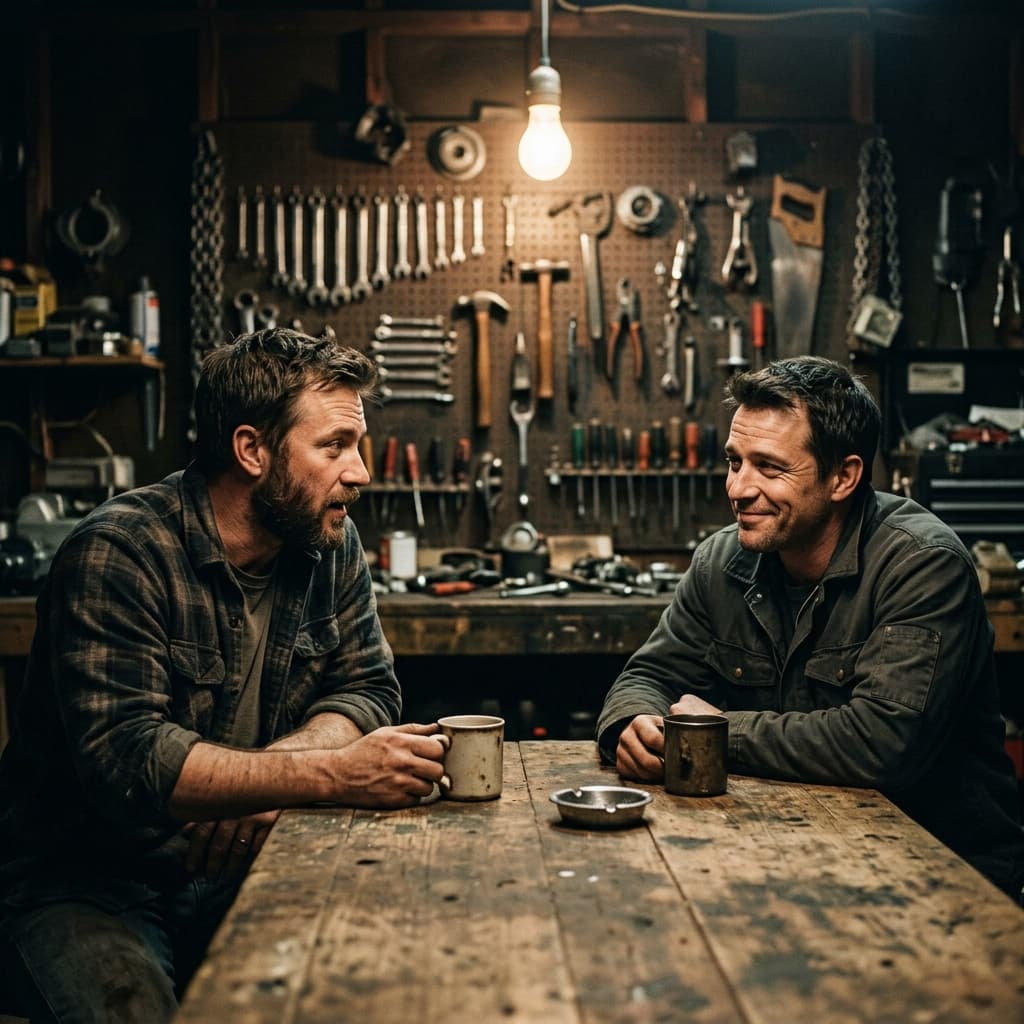
Every grief podcast recommendation list eventually points you to the same two or three shows. That's fine — if you're not a man who lost his dad, can't stand dead silence, and weren't hoping someone would finally make a joke about the password-protected iPad sitting in a drawer you still haven't figured out how to open.
The grief podcast space is wide. The mapping is terrible. Most recommendation roundups surface the same four or five titles regardless of the listener's actual loss, gender, what they need right now, or whether they'd rather sit through a therapy session or a conversation that sounds like two guys talking honestly over a beer. Funeral.com put it well in their January 2026 guide: "One person's comfort show can be another person's emotional landmine." That's the only framing you actually need before choosing a show.
This piece is a decision guide. Not a ranked list. It will tell you what each major show is actually built for, where each one earns its reputation, and which one is designed for men who lost their fathers specifically — rather than men who happen to have stumbled into a grief podcast built for a different listener entirely.
Why "Best Grief Podcast" Is the Wrong Question
The question most men are actually asking when they search for grief podcasts is more specific than it looks. They're not looking for the most critically acclaimed show. They're looking for something that sounds like them, addresses what happened to them, and doesn't require them to perform their grief in order to participate.
The real decision framework has four axes. First: loss specificity — is this show about grief broadly, or father loss specifically? The emotional and practical experience of losing a dad occupies its own category. The estate paperwork, the garage full of tools no one wants but everyone feels guilty about throwing away, the moment you realize you're now the oldest generation in your family — that's a specific weight, and a general grief show may not touch it. Second: tone — clinical and therapeutic versus storytelling versus humor-forward. These are genuinely different experiences. Third: audience — is the show built for you, or are you adjacent to its intended listener? And fourth: format — solo reflection, expert interview, co-hosted conversation, or call-in. Format shapes what you get out of each episode more than most listeners realize before they start.
When you ignore those four filters and just grab whatever ranks first on FeedSpot, you might land on a genuinely excellent show that was never built for your situation. You'll then assume grief podcasts aren't for you, which would be the wrong conclusion.
The Shows Everyone Recommends — and Who They're Actually For
Thanks for Asking (formerly Terrible, Thanks for Asking)
FeedSpot's ranking of 100 best grief podcasts puts Thanks for Asking at number one, and that ranking is accurate for its intended audience. Host Nora McInerny was widowed young, and her own story anchors the listener trust the show has built across millions of downloads. The format is call-in, the tone is raw honesty with dark wit, and the vulnerability is real.
The honest limitation: it is not built for men processing a father loss specifically. McInerny's community and emotional register grew around a different set of experiences — primarily spousal loss, broader family grief, and a predominantly female listener base. None of that is a flaw. But if you're a man who lost his dad and you're hoping the show sounds like it was made for you, it probably won't. You'll feel adjacent to it rather than inside it.
Griefcast
Griefcast, hosted by UK comedian Cariad Lloyd, is the closest thing to humor-forward grief podcasting in the established landscape. Lloyd interviews other comedians and creatives about their losses, and the humor that emerges is genuine — it's not a coping mechanism bolted onto a clinical format, it's native to the conversation.
It's worth acknowledging honestly: Griefcast is a genuinely good show. If you can find an episode with a guest whose loss resembles yours, it delivers. The limitation is specificity. The show is UK-centric, not dad-specific, and the humor emerges from the guest's professional craft — most guests are performers who have processed their loss partly through their work. That's a different thing from two men applying humor to a shared experience of losing their fathers. Griefcast uses humor because its guests are comedians. The distinction matters when what you actually want is someone who sounds like you, not someone skilled at making hard things funny.
Grief Out Loud, Open to Hope, and All There Is
These three represent the clinical and celebrity-anchored ends of the grief podcast spectrum, and each does what it does well.
Grief Out Loud, produced by the Dougy Center, is described by grief professionals as a gold standard for clinical practice. Host Jana DeCristofaro runs expert interviews, professional frameworks, and personal stories through a structured, evidence-based lens. Tulip Cremation's podcast roundup highlights it for exactly this reason. Open to Hope, hosted by mother-daughter duo Dr. Gloria Horsley and Dr. Heidi Horsley, emphasizes community and transformation — it's built around the idea that grief can eventually open into hope. All There Is with Anderson Cooper is the celebrity-anchored version: Cooper processing his own substantial losses through intimate conversations, with the emotional depth that comes from someone willing to be genuinely vulnerable on a public platform.
The useful signal for you as a listener: if you want therapeutic vocabulary, professional frameworks, and expert guidance on what you're experiencing, these shows deliver. If you want someone who has been exactly where you are — practically, emotionally, specifically — they don't. A show staffed by grief counselors tells you how loss works in theory. It can't tell you what you're going to feel standing in your dad's garage six months later, looking at forty years of accumulated hardware.
What Makes a Grief Podcast Specifically Built for Men Who Lost Their Dads
Loss Specificity
Father loss has a distinct practical and emotional fingerprint that general grief shows rarely map onto. There's the paperwork marathon that starts before you're done crying. There's the moment you become the person who's supposed to know what to do next, even though the person who taught you everything is the one who just died. There's the grief that ambushes you in a hardware store because your dad would have known exactly which fitting to buy and now you're standing in an aisle holding three wrong options.
Dead Dads is built entirely around this specificity. The show description lists it directly: "paperwork marathons, the password-protected iPads, the grief that hits you in the middle of a hardware store." That's not a marketing line. It's the show's subject matter. Episodes like "He Got the Call… and Had to Tell His Family His Dad Was Dead" (featuring John Abreu, April 3, 2026) and "If You're a Guy Who Lost His Dad… Listen to This" (Greg Kettner, March 20, 2026) are structured entirely around a single guest's experience of losing their father. Not grief in the abstract. Not bereavement theory. Their specific dad, their specific loss.
Storytelling as the Primary Methodology
The dominant modes in grief podcasting are clinical (expert interviews, therapeutic frameworks) and confessional (raw monologue, diary-style). There's a third mode — storytelling-first, where guest narratives carry the emotional weight — that's less common but arguably more effective for men who don't respond naturally to either lecture format or extended open-ended processing.
Stories are how men have always communicated about hard things. Not frameworks. Not vocabulary. Stories. When John Abreu sits down and walks through what it was like to receive the call about his father's death and then have to tell his family, that story does something a clinical episode about "shock and denial" cannot. It creates recognition. Which is, for a lot of men who lost their dads, the only form of comfort that actually lands.
Humor as a Tool, Not a Tone
Dark humor in grief is not the same as not taking grief seriously. It's a recognized mechanism for managing the cognitive dissonance of loss — the way life keeps being absurd even when you're devastated. Dead Dads has explored this directly, and the show's tagline — "Death. Jokes. Closure. Not always in that order." — is the clearest possible statement of that position.
Here's the distinction that matters: Griefcast uses humor because its guests are comedians. Dead Dads uses humor as a shared framework between two men who both lost their fathers. One is performative. The other is relational. If you've ever made a dark joke about your dad's death and then felt guilty about it, the relational version is the one that will feel like permission rather than a performance you're watching from the outside.
Host Credibility Through Shared Experience, Not Clinical Authority
Most grief shows derive their authority from credentials — the host is a therapist, a grief counselor, a researcher, or a public figure whose loss has been widely documented. That authority is real and valuable for what those shows do.
Dead Dads hosts Roger Nairn and Scott Cunningham derive their authority from a different source: they are the listener. Both lost their fathers. The show exists because they couldn't find the conversation they were looking for. In Roger's words from the January 9, 2026 blog post: "We started it because we couldn't find the conversation we were looking for." What followed that loss — the silence from other men, the support that fades after the funeral, the way grief makes everyone around you uncomfortable — is the show's entire premise.
For men who already feel reluctant to engage with grief content, that origin matters. You're not being advised by an expert. You're being accompanied by someone who has been exactly where you are.
Red Flags to Watch For in Any Grief Podcast
A few patterns in grief podcasting tend to signal a mismatch before you're twenty minutes in.
The "journey to wholeness" framing: if a show is built entirely around achieving resolution, it implicitly treats grief that doesn't resolve cleanly as a problem to be fixed. Dead Dads itself explicitly rejects this: "It's not a 'journey to wholeness.' It's more like a slow-motion car crash where the radio is stuck on a classic rock station your dad loved." That's not a joke. That's an accurate description of what grief actually looks and feels like for most people, for a long time.
Expert-only formats are useful for specific needs and actively unhelpful for others. A show built around therapists and grief researchers tells you how loss works in theory. It won't tell you what to say to your kids the morning after your dad dies, or what to do with a garage full of tools you'll never use but can't bring yourself to throw away. Clinical authority and lived authority are different things. Know which one you need.
General loss framing is worth flagging, not because it's bad content, but because it's a mismatch signal. Shows covering all grief — pets, spouses, children, parents, friends — do important work. But the specific weight of losing the person who was supposed to know what to do next doesn't always land in those conversations, and if you're already reluctant to engage with grief content, the mismatch is easy to mistake for personal failure.
Finally: several top-ranked grief shows have strong female listener communities and cultures. If you're a man who is already hesitant to engage with grief publicly, finding yourself in a community that doesn't reflect your experience makes it easier to disengage entirely. That's not about inclusivity — it's about what actually works for the person who won't ask for help in the first place.
One listener review on Dead Dads captures this directly: "It's the type of pain that I bottle up and keep to myself. I felt some pain relief." — Eiman A. Another five-star review calls it a show that "touches on things that we as guys either don't discuss or are afraid to discuss about the deaths of our dads." Both reviews are on deaddadspodcast.com/reviews. Both describe the same pattern: private consumption, low public engagement, high need.
The Recommendation: Which Show for Which Situation
Here is the straightforward version.
If you want the most emotionally raw, broadly respected grief podcast — Thanks for Asking is the standard. It earned that ranking. Listen to it.
If you want humor from skilled storytellers across all types of loss — Griefcast is genuinely excellent and underrated outside the UK. Start with an episode where the guest's loss type is close to yours.
If you want professional frameworks and clinical language to understand what you're experiencing — Grief Out Loud and Open to Hope are built for exactly that need. The Dougy Center's standards are real.
If you lost your dad, you're a man, and you're a new father yourself wondering how to do this without being able to call yours for advice — this piece on navigating new fatherhood after losing your dad is where to start, and the Dead Dads podcast is what comes next.
If you lost your dad, you're a man, and you want two people who have been exactly where you are — with humor that isn't a performance, practical stories about the stuff no one else covers, and no requirement to perform your grief in order to participate — Dead Dads is the show built for that. It's not for everyone. It is for you.
The recommended entry point is the John Abreu episode. The premise is immediate, the storytelling is direct, and you'll know within the first ten minutes whether this is the conversation you've been looking for. If it is — and you've got something you want to add about your own dad — the site has a place for that too.
Get the latest from The Fatherless Manual delivered to your inbox each week
More from The Fatherless Manual
How to Navigate Social Situations When You Grieve With Humor, Not Tears
You made a joke about your dad at the family dinner — a good one, actually — and the room went quiet like you'd said something terrible. That silence is its own
Why Grief Support Groups Fail Men — And What Is Quietly Replacing Them
Nearly a quarter of men say they would never consider professional therapy for mental health struggles, even when they're in crisis. Not because they don't need
How to Introduce Your Kids to the Grandfather They'll Never Meet
Your kid is going to ask about him. Maybe they already have — the casual, devastating "What was Grandpa like?" lobbed from the backseat on the way to soccer pra